We Are a Family by the Precious Blood of the Lamb

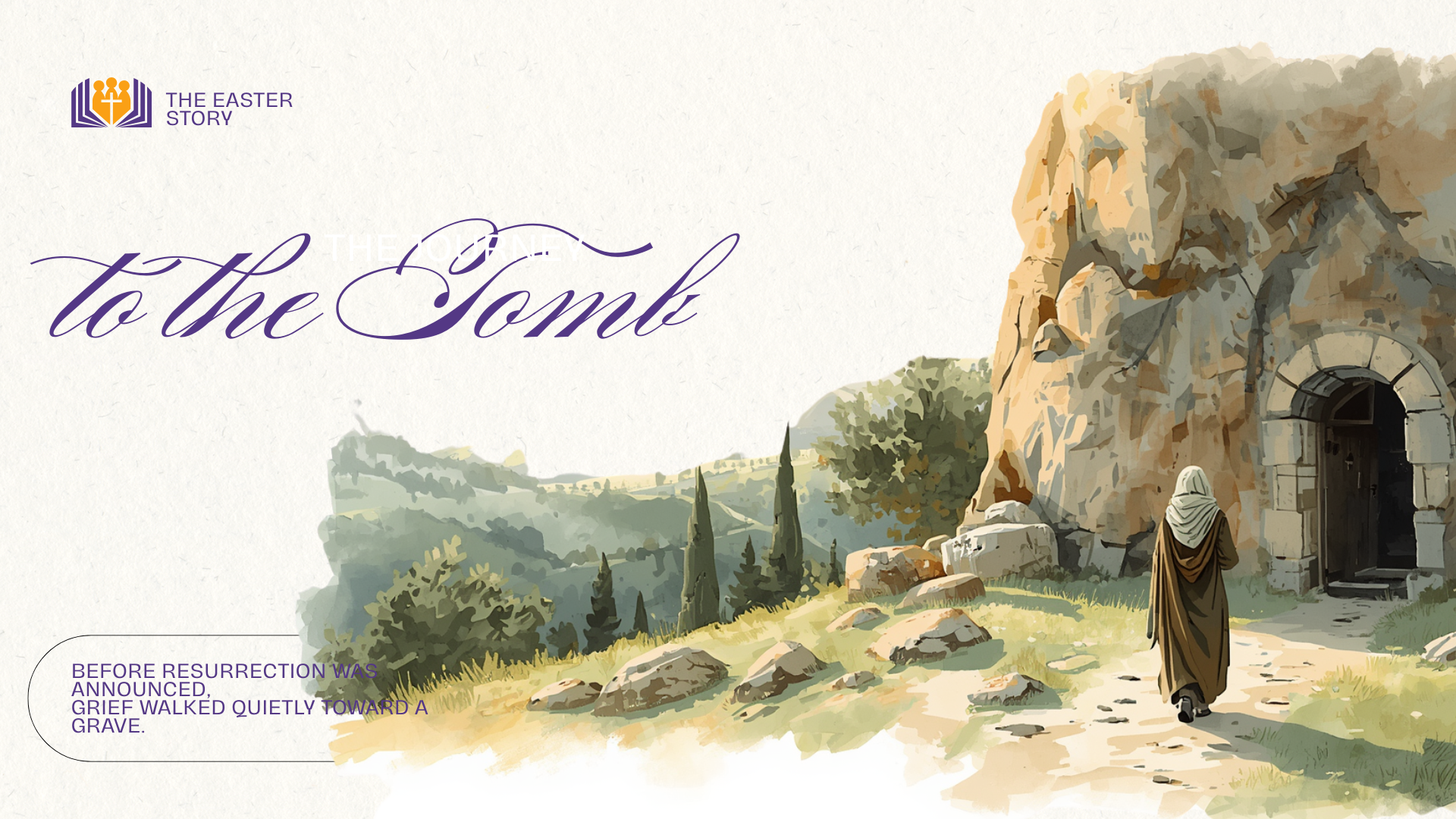
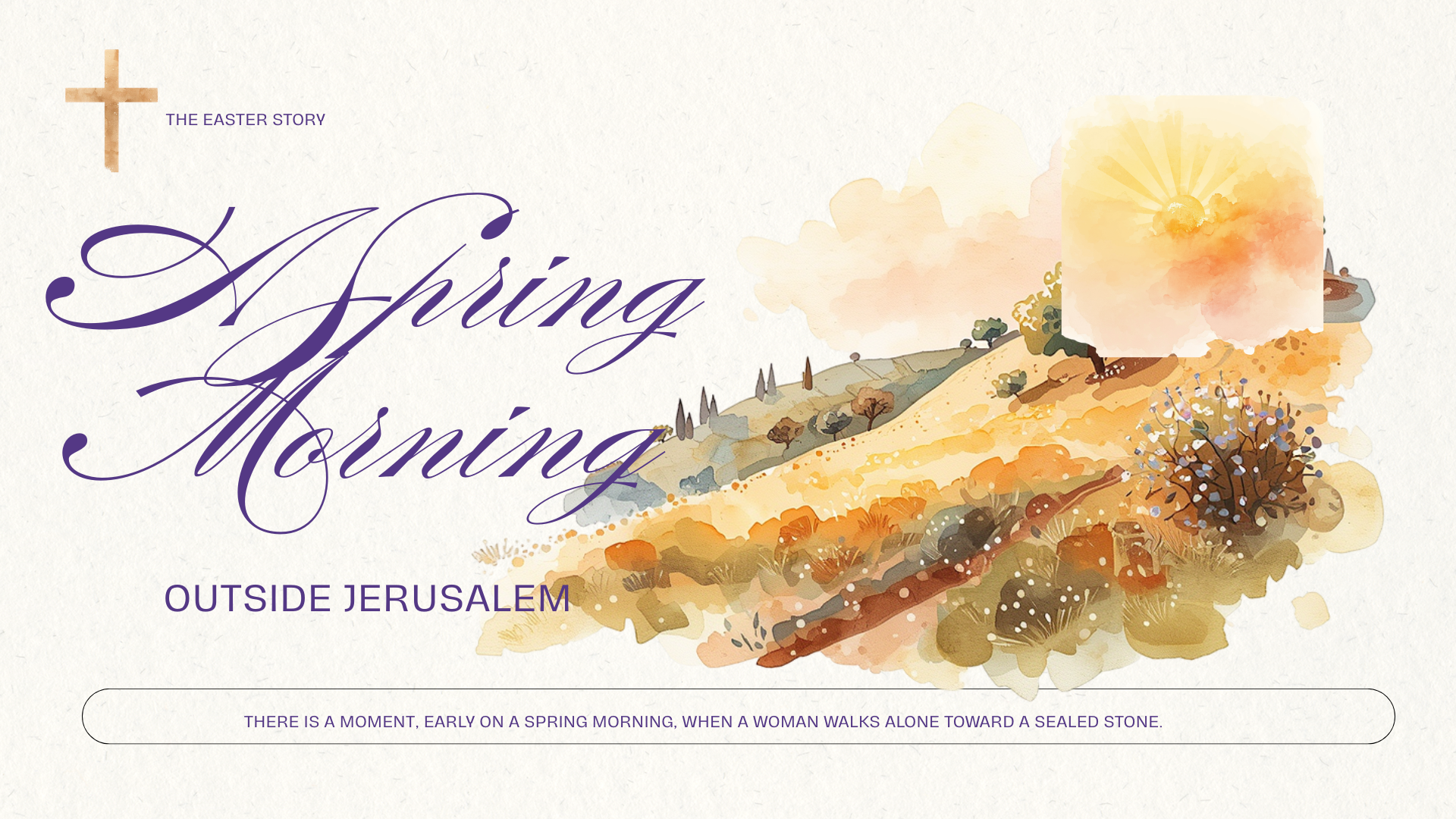
There is a moment, early on a spring morning somewhere outside Jerusalem, when a woman walks alone toward a sealed stone.
The city is still quiet. The sun has not yet broken the horizon. And inside her chest, something has already broken — a grief so complete it has become its own kind of silence.
Her name is Mary Magdalene. And she is walking to a tomb.
What she does not yet know, what none of them yet know, is that the entire history of the world has pivoted on what happened inside that sealed chamber over the course of five days.
Not just the history of Israel. Not just the history of the church. The history of every human being who has ever wondered whether love is stronger than death, whether shame is really final, whether the story ends at the grave.
It does not.
But to understand why the empty tomb means what it means, you have to go back to the beginning of the week. You have to go back to a road lined with palm branches, to the sound of a city in celebration, to a crowd welcoming a king who was not at all the king they thought they were getting.
The King Had Arrived
No event in the ancient world was witnessed and recorded by four independent Gospel voices the way the entry of Jesus into Jerusalem was. Matthew records it. Mark records it. Luke records it. John records it.
Four Gospels. Four angles. One unmistakable conclusion: the King had arrived.
But this was a king unlike any the world had ever seen. And the way he chose to arrive told you everything.
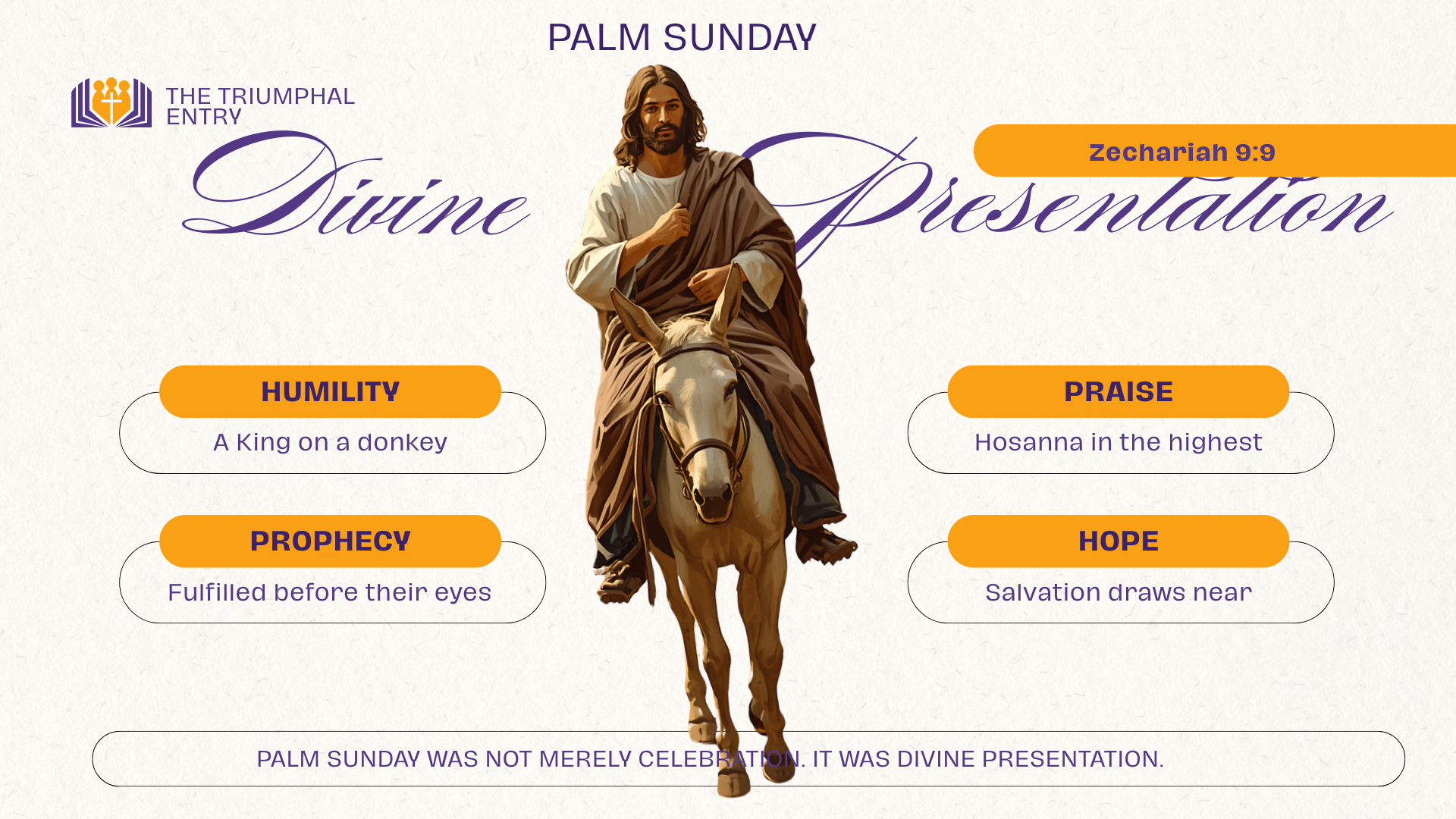
Zechariah had written the prophecy centuries before Jesus was born: “Rejoice greatly, O daughter of Zion! Behold, your king is coming to you, lowly and riding on a donkey.”
When Jesus chose a donkey to ride into Jerusalem, it was not improvisation. It was declaration.
Kings rode warhorses when they came to conquer. They rode donkeys when they came in peace. Solomon himself rode a donkey to his coronation. Jesus was announcing his kingship in the language his world would understand, and he was doing it with deliberate, sovereign precision.
The crowd understood enough to celebrate. They spread their cloaks on the road. They tore palm branches and waved them like banners. They shouted Hosanna, which means, Save us now.
They wanted Rome overthrown. They wanted a military liberator on a white horse.
What they got was something far more powerful and far more costly: a sacrificial Lamb on a donkey, riding not toward a throne room, but toward a cross.
The King came, but not as the crowd expected. He came in peace, in humility, and in love strong enough to die.
His throne would not be gold. It would be wood. His crown would not be jewels. It would be thorns.
And while the city celebrated, Jesus, seeing everything they could not see and knowing what was waiting at the end of that road, wept.
This is the texture of the love that carried him through that gate: not triumphalism, but grief. Not the cold indifference of a God who does not feel, but the deep, aching sorrow of One who sees clearly what others are missing and loves them anyway.
The Lamb Was Being Examined
What most people watching the procession did not understand was that they were witnessing something far older than the moment itself.
The calendar was not accidental.
According to Exodus 12, every household in Israel was to select the Passover lamb on the tenth day of the month of Nisan, bring it home, and examine it for four days before it was slaughtered on the fourteenth day at the appointed time.
Palm Sunday was the tenth of Nisan.
When Jesus rode through the gates of Jerusalem, he was not merely attending a festival. He was presenting himself as the Lamb.
For the next four days, the religious leaders came at him relentlessly. The Pharisees challenged his authority. The scribes tested his doctrine. The Sadducees tried to trap him on the resurrection.
Every attack failed. Every trap collapsed. Every test was answered with a wisdom that left his questioners silent and the crowds amazed.
The Lamb was being examined and found spotless.
Then, on Friday, at the very hour Passover lambs were being slaughtered, Jesus breathed his last.
Paul would later write it plainly: Christ, our Passover, was sacrificed for us.
Not one bone of his body was broken, fulfilling the command concerning the Passover lamb written centuries earlier.
Every lamb from Egypt onward had been a shadow. Jesus was the substance. The Lamb the whole sacrificial system had been pointing toward from the very beginning.
The Cross Was Not the End
During that same week, Jesus gave his disciples an image that would turn everything they thought they knew about power upside down.
Unless a grain of wheat falls into the ground and dies, it remains alone. But if it dies, it produces much grain.
He was not teaching agricultural science. He was teaching about himself, and about what God does with death.
The cross was not a tragedy without purpose. It was a planting.
The tomb was not merely a grave. It was a seedbed.
The silence of Holy Saturday was not the silence of abandonment. It was the silence of germination.
You are not decaying. You are germinating. God is doing something in the dark that could not happen in the light.
Something was happening in that sealed darkness that no human eye could see and no human mind had fully mapped. Jesus was not a victim of Friday. He was a seed planted in that tomb to produce a harvest that would stretch across every century and reach every corner of the earth.
And Then Came Sunday
Mary expected a sealed stone. She expected guards. She expected the quiet finality of a grave.
What she found was an open entrance, folded burial cloths, and two angels asking a question she could hardly process: Woman, why are you weeping?
The stone was not rolled away to let Jesus out. He had already risen. The stone was rolled away to let the witnesses in.
God was not opening a door for the resurrected Christ. He was opening a window for a grieving world to see that death had lost.
Mary turned and saw a man standing nearby. Through her tears, she mistook him for the gardener. She was still trying to interpret the moment through the grammar of death.
And then he said her name.
Mary.
One word. Her name. Personal. Precise. Intimate.
And everything changed.
She ran to the disciples and declared the seven words that have echoed across history: I have seen the Lord.
She came weeping. She left witnessing.
She came searching for a body. She left carrying a declaration.
She came to grieve a death. She left to announce a life.
When God Opens What We Thought Was Closed
The resurrection is not merely a historical event to be believed. It is a theological earthquake that restructures everything: how we understand God, how we understand ourselves, and how we understand the dark seasons every human life passes through.
Mary stood outside that tomb and concluded that someone had stolen the body. She was interpreting a miracle through the lens of loss.
How often do we do the same?
We look at the open, unexplained spaces in our lives, the plans that collapsed, the relationships that ended, the dreams that went quiet, and we conclude that something has gone wrong.
But the open tomb was not absence. It was arrival.
What looks like an ending may be exactly what Jesus described with the grain of wheat: a seed going into the ground, not decaying, but germinating.
The stone the builders rejected became the cornerstone. What people dismissed, God exalted. What men nailed to a cross, God raised to the highest place.
Whatever has been discarded, devalued, or rejected in your life, do not assume God shares that verdict.
We Are a Family by the Precious Blood of the Lamb
There is a word running beneath every line of the Holy Week story, from the donkey on Palm Sunday to the folded grave cloths on Easter morning.
It is not merely a religious word. It is a relational one.
Family.
The Passover in Exodus was not simply a national ritual. It was a family meal. Each household gathered around the same lamb. The blood was not placed on the synagogue. It was placed on the home.
God was not just saving a people. He was creating a household.
And the new Passover, the one Jesus instituted on the night he was betrayed, was the same kind of moment. He gathered his disciples around a table and said, This is my body. This is my blood.
That was not just the founding of an institution. It was the birth of a family.
We are not a club of like-minded people who happen to share a theological framework. We are not just a social organization that meets on Sundays.
We are people who have been brought into the same household by the same sacrifice, washed in the same blood, adopted into the same family, and seated at the same table.
Every tribe. Every tongue. Every broken story. Gathered into one household by one Lamb.
We are a family by the precious blood of the Lamb.
Not by culture. Not by history. Not by agreement alone. By blood.
This is why the resurrection matters not only personally, but together.
When Mary ran from the tomb to find the disciples, she was not running to strangers. She was running home. She was running to family. She was running to tell them that the One who had made them a family was alive.
The Resurrection Still Speaks
When the church gathers, when we worship, when we take communion, when we carry each other’s burdens and celebrate each other’s breakthroughs, we are living out that same truth.
We are a family of the resurrection, living proof that the tomb is empty and that death is not the final word.
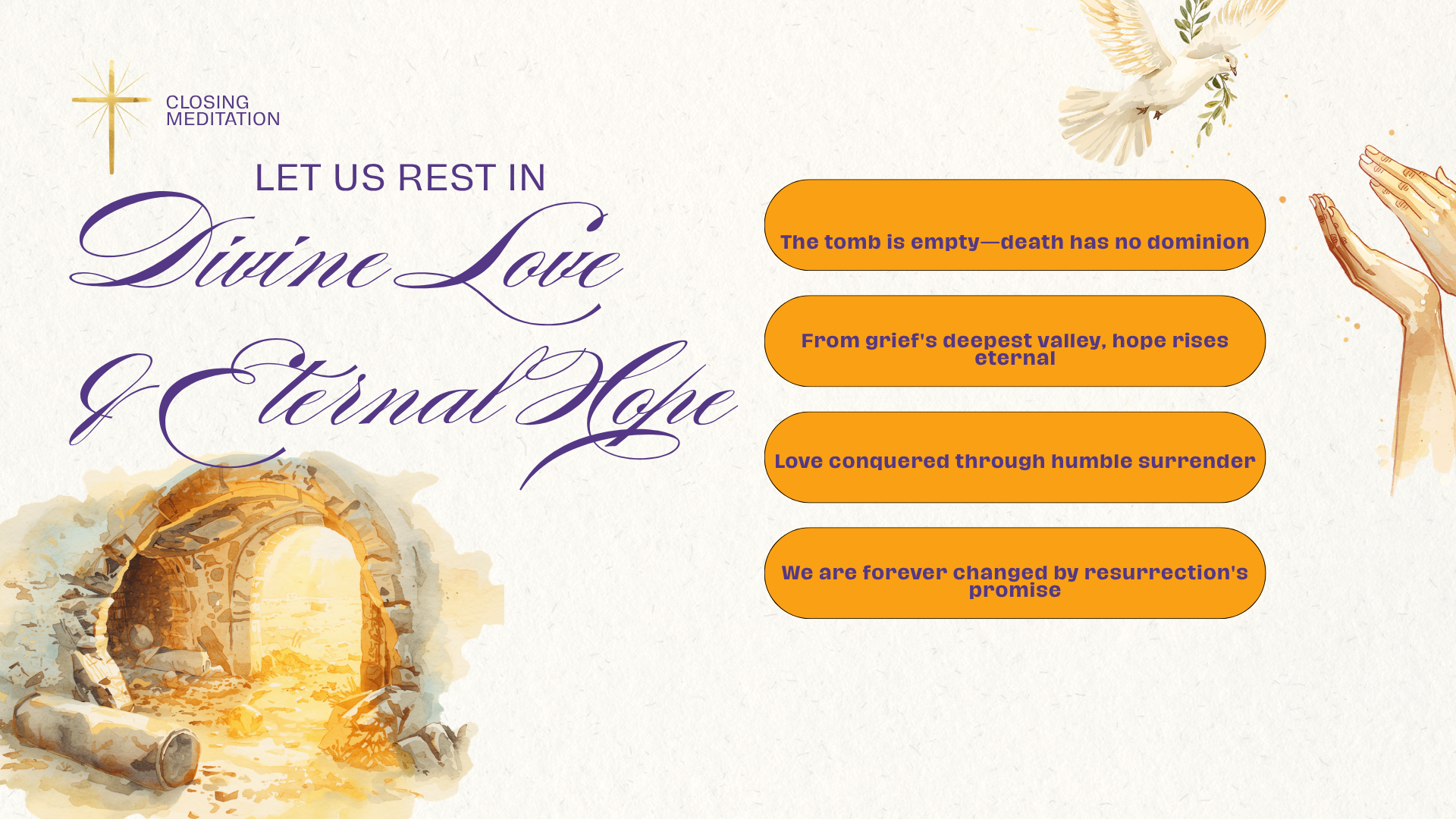
Whatever has rolled a stone over your hope, God still moves stones.
Sin. Shame. Addiction. Grief. Fear. Regret. None of these are beyond the reach of resurrection power.
The stone is not too heavy. The seal is not too official. The Saturday is not too long.
And if you are in a season that looks like burial and feels like abandonment, if you are in the ground and cannot yet see the light, hear this clearly:
God has not left.
The silence is not absence.
Something is happening in the dark that could not happen in the light.
You are not decaying. You are germinating. Your harvest is being prepared.
Hold on. Sunday is coming.
Final Reflection
The writer of Hebrews tells us that for the joy set before him, Jesus endured the cross, scorning its shame, and sat down at the right hand of the throne of God.
What was the joy set before him?
You.
The family.
The household his blood would purchase, people from every tribe and tongue and nation, brought together not by what they had earned, but by the sacrifice of one Lamb chosen before the foundation of the world.
He saw you on the other side of the cross. And he kept going.
He rode in to die. He died to rise. He rose to reign.
And because he reigns, your story is not over. Your pain is not wasted. Your past is not your prison.
We are a family by the precious blood of the Lamb.
And death could not hold our elder brother. It will not hold us.